Friday, October 14, 2016

Fabulous Fall!

Hey Science Friends,
This Weather Wednesday was all about fall. I was looking forward to it considering the school hallways and walls are being filled with all things fall. One of my favorites has always been fall tree projects.
These two fall trees were made by our fabulous art teacher Mrs. Lane and served as such an inspiration for what we did in class.
As you can clearly see fall is all around me! I really wanted something to create after our discussion about the seasons. So, we decided on simple torn paper trees because we had plenty of paper on hand and we knew this would be just the thing to kick off thinking about all things fall.
And the kids had a great time making the leaves. We had plenty to work with in no time. With a little classical music playing in the background I am willing to say it was a peaceful ending to a perfect day.


Saturday, October 1, 2016

Describing Properties

Hey Science Friends,
We have been busy working on describing properties of objects. We have been learning to describe objects by shape, size, mass, texture and color. We spent several sessions learning how to do this investigation independently. Our goal is to be able to observe, describe and record properties of objects. In the beginning of our investigations we observed and described objects by just one property. We would pick an object, pass it around and describe it by that property.
Books by Tana Hoban helped us understand how to describe an object by one specific property.
The books are filled with pictures that help young children understand the concept. These are great books to elicit a lot of communication and discussion.
We previously had picked a classroom object to use as an object of comparison when talking about mass.
Going on object hunts for our independent investigations was fun because it got us up and moving around before we sat down to independently investigate.
No surprise that Pete ended up as an object to investigate! If you would like a copy of our recording page click HERE! Have fun investigating science friends.

Friday, September 9, 2016

My Five Senses Reports!

Welcome Science Friends,
We have had a great week learning about our senses as tools for investigation. I think that our Science Notebooks just might be our favorite tools in science so far. Once the labels were put on our notebooks and safety contracts were signed and glued inside, I think we all felt like official scientists just ready for our first hands-on investigation.
We were looking forward to the end of the week because we knew that on Friday we would be investigating bubblegum, Not only were we going to be able to practice safe investigations but we were able to use all of our senses to investigate bubblegum.
I was surprised at how well everyone listened as I walked through the process of recording our findings for the first time. I thought it might be a struggle considering everyone knew we were going to really investigate bubblegum with all of our senses. To my surprise, the children were listening and answering questions as I went through it step by step. We recorded what our bubblegum looked like, smelled like, tasted like, felt like and sounded like. We learned how scientists "waft" a scent safely and came up with some pretty good descriptions of what our bubblegum smelled like. And we were not sure if our bubblegum would actually taste like what we thought.
I did have to help with the recordings and thought everyone did a great job for the first time out and for so early in the year. As we ended the day the children were excited and pretty quiet with gum in their mouth! We are all looking forward to more investigations in the coming weeks.

Sunday, May 15, 2016

Describing Properties Freebie!

Hey Science Friends,
As part of our Science standards we describe properties of objects. Setting up this investigation can really be pretty simple. You do not need any expensive materials and you can keep this investigation going all year long. After some guided practice and a little gradual release, you will find that this can be one of the best independent investigations to have around. What I love is that a simple nature walk can provide enough materials for several investigations. Add in a hand lens and your kids will begin to discover their inner scientist.
After the investigation and inventory, your scientists will be ready to report their findings to the class. You can even have fun with this for Science Show and Tell! A perfect way for them to have some fun at home finding the perfect object to bring in and investigate. To set this up for independent investigations all you need is a box, hand lens, clipboard, copies of the inventory and objects. It just can't get easier than that!


Saturday, May 7, 2016

Sunflowers!

Hey Science Friends,
It is that time of year that has us dreaming of sunny summer days as we learn about plant parts and life cycles. No unit could be complete without taking a closer look at sunflowers. What is it about sunflowers that we all love so much? My class thinks it is the color that we love so much and it makes us feel happy. Another thing my class has loved this year has been notebooking. They ask me before going to PE if we are going to use our Science Notebooks in science each afternoon. They love it if we cut and glue something in but also love illustrating what we have learned.
Our notebooks are simple...just spiral notebooks. After trying out different notebooks over the years I always come back to simple spiral notebooks. I buy them in the summer when they are on sale. I used to worry if I would have enough to fill them up for the year but now I worry that I will have a second one for each child within a year!
With so many great books to read about sunflowers it is easy to keep the interest going. Our favorite this year was Sunflower House by Eve Bunting. I think it's my favorite every year because I just love her books so much. As I read the book this year, I got a little misty. I asked the kids if when I was reading it made them feel a little misty too. I really enjoyed hearing their responses. I wished I had had a text to self response sheet with me ready to go. Instead we all listened to each other and had a rich discussion. So many great connections were made with this story.
We still have some fun stuff to do with sunflowers before the year is over. We are gearing up to go to visit a farm and we are preparing for that. We are hoping to see some sunflowers along the way.


Saturday, December 5, 2015

Is It Living?

Hey Science Friends,
I am always on the hunt and lookout for the perfect book. You know the kind of book that can say and illustrate a concept that presents a concept that is easily understood by young learners. I am so fortunate that I work with teachers that not only share that passion but share it with me and share their books! This week we have been discussing living and nonliving and this book just added to that discussion. But what I love about the book the most is that it also lends to a discussion about offspring. 
Do You Know Which Ones Will Grow?
Our objective is to differentiate between living and nonliving things based on whether they have basic needs and produce offspring. I couldn't have been passed that book at a more perfect time because it not only added to our discussion but everyone was eager to share what they were thinking with each turn of the page. The book also gave us plenty of ideas to generate a great shared writing list and when it came time to notebook about it, we all had a lot to pull from. This year the children love notebooking in both math and science and if I tell them we are using our notebooks they are pretty excited and totally engaged.
As we were just about to leave for the week someone took note of one of the last slides we had looked at and asked...
Is that seed living or nonliving? Is that a baby apple?
This question gives us a great starting point for next week as we justify our thinking and discuss basic needs of plants and animals and examine evidence that living organisms have basic needs such as food, water and shelter for animals and air, water and nutrients, sunlight and space for plants. 
We used this PowerPoint about living and nonliving to help with our discussion and provide us with real world examples to discuss living and nonliving. Next week we will be justifying our thinking by posing the question...
How do you know?
I am sure we will all have fun discussing our favorite living and nonliving things and sharing with each other how we know it is living or not! 


Saturday, October 17, 2015

Data and Graphs!

Hey Science Friends,
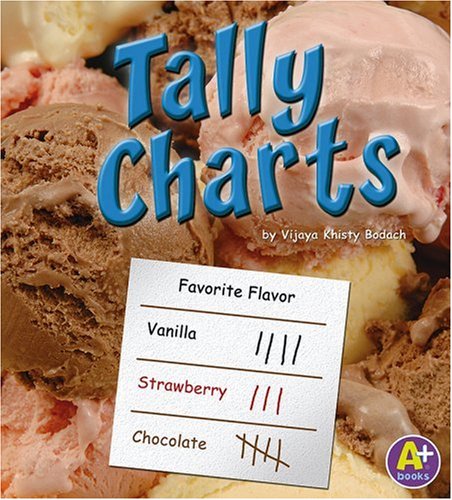
What a great week we had and the end of the week had me excited for the next when a teacher friend brought me some books to look over. It made my day. I have looked the world over for appropriate books about graphs and never could find what I was looking for...until now!
Believe it or not, concept books are my favorite. They always have been. And these books came at the perfect time just as we are comparing numbers in math and looking at weather data in science. We have gotten so good we had to increase the quantities that we are comparing. And when those quantities get larger we need some helpful tools to organize it all...graphs!
There are several in this series and you are going to want them all! There is just no way to get just one. I searched Amazon and was able to find all of the books in the series. What a thrill it was to put these books into my cart and know they will be at my doorstep within days. Just in time for me to look them over, take a few notes and plan how I am going to use them in class. And I will carry them to the library and beg my librarian to order them all because we need them there too. 
My kids already know that I read the same books to them more than once so I know that these books will be worth every penny to me. I read with a different purpose or focus. And another reason I had to have this set of books is because it has longevity. We can use these books all year long. And if I needed another reason I know I can use them for math and science and that just seals the deal for me. I feel like I hit the jackpot! 
I will spend time modeling, practicing and talking to the children about how to read these books independently even if they can't read all the words. The pictures are good enough to support some independent thinking when children browse these books. So, in the independent browsing bins these will go when I finish using them. Just think of all the opportunities for the children to use comparative language when looking through these! 

Thursday, October 1, 2015

Penguins In The Classroom!

Hey Science Friends,
 Are you ready for the 2015-2106 Adélie Penguin breeding season in Antarctica?   Starting Nov 24, follow 10 new penguin families as they raise their chicks at Cape Royds, on Ross Island.  Adopt a penguin family, keep a field notebook, record parent foraging trips, egg hatching and chick rearing data. Follow daily pictures as these amazing birds raise their chicks. http://www.penguinscience.com/education/royds_nestcheck.php
Combine science, art and geography. Have your students track their penguin postcards as they are mailed down to us, and then back from Antarctica. http://www.penguinscience.com/education/postcards.php

 Design and make a flag to fly at our research station.
 http://www.penguinscience.com/education/design_flag.php
 Ready made instructional powerpoints (with teaching notes) about penguins, Antarctica and more!

Something for everyone about Antarctic!

Penguin Science is an NSF funded project engaging and educating classrooms and the public about Antarctica and the amazing Adélie penguins as they raise their chicks and cope with global climate change.

Thursday, August 6, 2015

The Science Of Teaching Science!

https://www.youtube.com/channel/UC6dyNTnSopdgye2gQBVSNVg
Hey Science friends,
As teachers we prepare to greet classrooms full of new faces in the coming weeks, many of us turn to professional development opportunities to refresh and strengthen our skills for the year ahead. Recognizing the challenges of traditional professional development tools, which often require significant investments of both time and money, the Smithsonian Science Education Center (SSEC) launched Good Thinking!: The Science of Teaching Science in June — a free, engaging and entertaining web series designed to support science educators. The series addresses the need for accessible professional development tools that help teachers break down barriers to understanding scientific principles and enhance their classroom skills.
https://www.youtube.com/channel/UC6dyNTnSopdgye2gQBVSNVg
 A first-of-its-kind series, Good Thinking! comprises short, animated videos that explore pedagogical ideas across a range of subject-matter topics such as natural selection, energy, and the water cycle as well as cognitive research findings on topics like student motivation, the myths of learning styles, and left- and right-brained people.
https://www.youtube.com/channel/UC6dyNTnSopdgye2gQBVSNVg
Good Thinking! shines a light on the pedagogical challenges teachers face, and provides solid, science-based ideas that keep their teaching on track. The series enhances K-8 science education and deepens understanding of STEM topics, for teachers and students alike.
https://www.youtube.com/channel/UC6dyNTnSopdgye2gQBVSNVg
 Join me as we explore a little about the Science of teaching Science
with the Smithsonian Science Education Center!
 

Wednesday, July 22, 2015

Tell Us About You Tuesday!


Hey Science friends,
Well, I am linking up with my friends at Freebielicious for Tell Us About You Tuesday. And it's early Wednesday morning, go figure. You know what they say for some people the wee hours in the morning are the most productive. I am a night owl and that is the way I have always been.
I am heading into my 16th year of teaching with a fresh and renewed mindset.
All of my career I have spent in Kindergarten which has been a true blessing for me.
I went to school and thought I would be a Science teacher because during my college years I truly recognized my love for the natural world and living things and I discovered the answers to many childhood questions I had about the world around me. In my last semester of college I took 27 hours just to take a kindergarten job that fell into my lap.
I live and teach deep in the heart of Texas. I have been here my whole life. Living in Texas my whole life, you would have thought that I had seen it all but that was not really the case until...one conversation kind of changed that all for me. Since I was a child I had always wanted to travel the back roads and see Texas! After sharing my childhood dream with my husband, it wasn't long before we hit the road! We hitched a little travel trailer and I swear we never looked back...not even once!
It is safe to say I have had my share of lakeside picnics along the dusty dirt roads of Texas. This experience has given me a chance to play around with my love of photography that I always had brewing inside of me but never knew I had a real use for until teaching and blogging came into my life.
I now have a lot of memories and pictures to share with my class when we talk about Texas and natural resources which also comes in handy for writer's workshop.
The sun was shinning so bright it was hard to tell what this picture would look like. I am sure there is a setting that I should have been using but balancing yourself on a kayak with a new camera this was my best shot.
My family and I are planning a future trip to Caddo Lake. I am looking forward to pictures from that area of Texas.
 I love cooking and I have a thing for setting the table. Inside and outside the table is always set. Setting the table for brunch is my all time favorite. Who doesn't like brunch? A laid back and stress free meal...ahhh! If I only have about one brunch a month, then I want it to be special! I blog about
that here!
 
 Until the back to school season gets in full swing I am sure you can find me somewhere between here and there on some dusty dirt road in Texas taking pictures and blogging along the way.


LinkWithin

Pin It button on image hover